Where's the Beef From Wendys Commercial
"Where'south the Beef?" The Story of the Most Famous Slogan Ever
How one line changed pop civilization and even an election
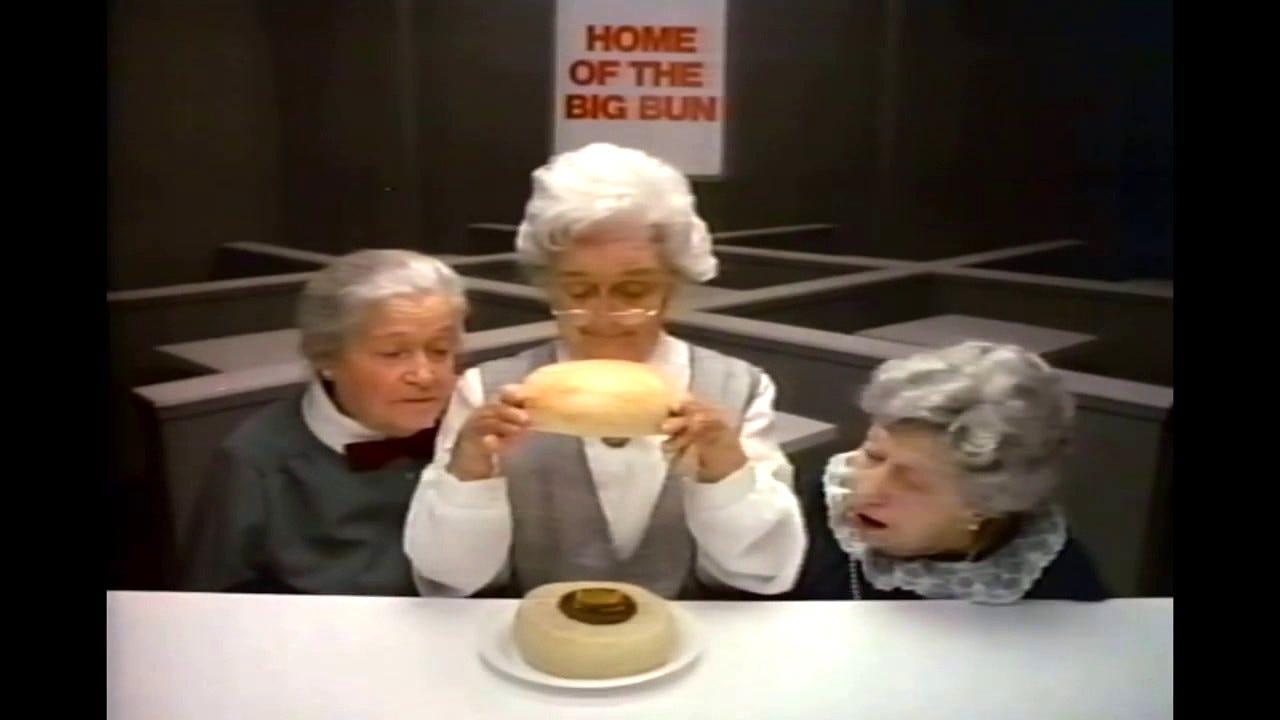
When you think of famous commercial slogans, which ones come up to listen? There are probably a few specific ones burned into your memory. Many iconic commercials and catchphrases have existed over the years, but in the 1980s i rose in a higher place them all.
"Where'due south the Beef" was a commercial catchphrase for Wendy'south that came out in 1984 and was used to question other fast food companies for their lack of meat. It starred unknown extra Clara Peller and was created by the groundbreaking Joe Sedelmaier. The phrase skyrocketed Wendy'southward profits and became ane of the most famous catchphrases of all time.
Setting the Stage for "Where'southward the Beef"
There have been many iconic catchphrases from commercials over the years. Some that may come to heed include:
- I'm Lovin' It
- Finger-Lickin' Good
- They're Chiliad-R-R-R-reat!
- But Practise Information technology
- A Diamond Is Forever
- Whassup (detest it or not, that thing didn't go anywhere…)
Simply in the 1980s, one catchphrase ruled them all — "Where's the Beef?" If you grew up during this time, yous know how iconic this catchphrase was. It had a tremendous impact on pop culture throughout the decade and beyond. It would be repeated everywhere and made Clara Peller — the woman who uttered the phrase — globe famous.
The phrase "Where's the Beef" continued to grow and would be used to question things such equally ideas, events, or products as to if they had any substance. The story of "Where's the Beef" is about how catchphrases can spread like wildfire, an unlikely celebrity, and an advertising managing director who changed the mode we brand commercials.
Why Was the "Where's the Beefiness" Commercial Needed?
McDonald's and Burger Rex were leaders of the fast-food burger market, and they promoted the size of their burgers with products like the "Large Mac" and the "Whopper."
Wendy'southward didn't have any specific "large-name" type burger, and most of their products were single patty burgers. Only they contained more meat than they believed people realized.
They wanted to showcase that their hamburger had more beefiness and that McDonald's and Burger Male monarch were hiding their lack of meat past using larger buns. Wendy'due south wanted to call them out for these tactics while showcasing that they had more than beef. So how would they do this?
Bring In Joe Sedelmaier
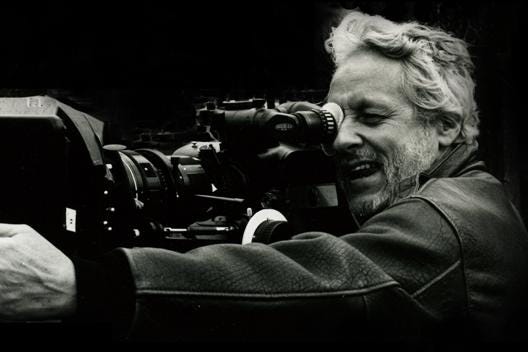
Sedelmaier was an art director at Young & Rubicam and J. Walter Thompson, which if you know your Mad Men, are big-time advertizing companies. Commercials used to ever feature glamorous looking people and models as they tried to create an idealistic impression of people to sell their products.
These days, though, we get a adept mix of that and more comedic based advertising — as you see in a lot of Super Bowl spots. Today, you're just as likely to see a regular-looking person in an ad as you are a Kardashian.
This seems normal but wasn't the instance in the '70s and '80s. During this fourth dimension period, commercials would apply flawless-looking people to create an image of perfection for whatever product was existence sold.
Sedelmaier inverse all of this and altered the appearance of how commercials looked. Instead of using perfect looking actors, he bandage regular-looking and sometimes not attractive people.
Again, this doesn't seem like a big deal today, simply this was groundbreaking in the '70s and into the '80s. He also gave commercials a looser experience instead of making them look like a sleeky, movie-like production. He wanted to make commercials more fun and engaging, as opposed to looking like every other advertisement you've ever seen.
His commercials would include things like people making strange expressions, sped upwards and slowed downwards movements, and exaggerated loping walks. Sedelmaier said that "a commercial is something you spotter when you lot sit down to picket something else — you should at least be entertained."
It was this approach that made him a stone star in the advertising world. He would win multiple Clio awards and was a highly sought after talent. Sedelmaier was the man behind the FedEx "fast-talking man" commercials, and he was just what Wendy's would need to deliver their message.
Creating "Where's The Beefiness" & the Different Variations
The project was put in identify by Wendy's international vice president, William Welter, who led the marketing team going into the campaign. Assisting Welter was Dan Dahlen, a 35-yr advertising veteran who worked for the Wendy'south ad team from 1982 to 1986.
Their goal was to show other places using buns to hide their meat and apply regular people in the ad in the way Sedelmaier had fabricated so effective. It started out as a commercial featuring a young couple; they were regular looking people — not models per se — but the advertising just wasn't funny.
For the next versions of the ad, they came upwardly with a storyboard for two different versions of the commercial after they ditched the young couple.
One version featured a trio of older men with one of them, an elderly bald man, saying, "Thanks, but where'south the beefiness?" Information technology didn't seem to connect very well, only they had another version they had filmed with 3 older ladies, including i named Clara Peller that they had discovered.
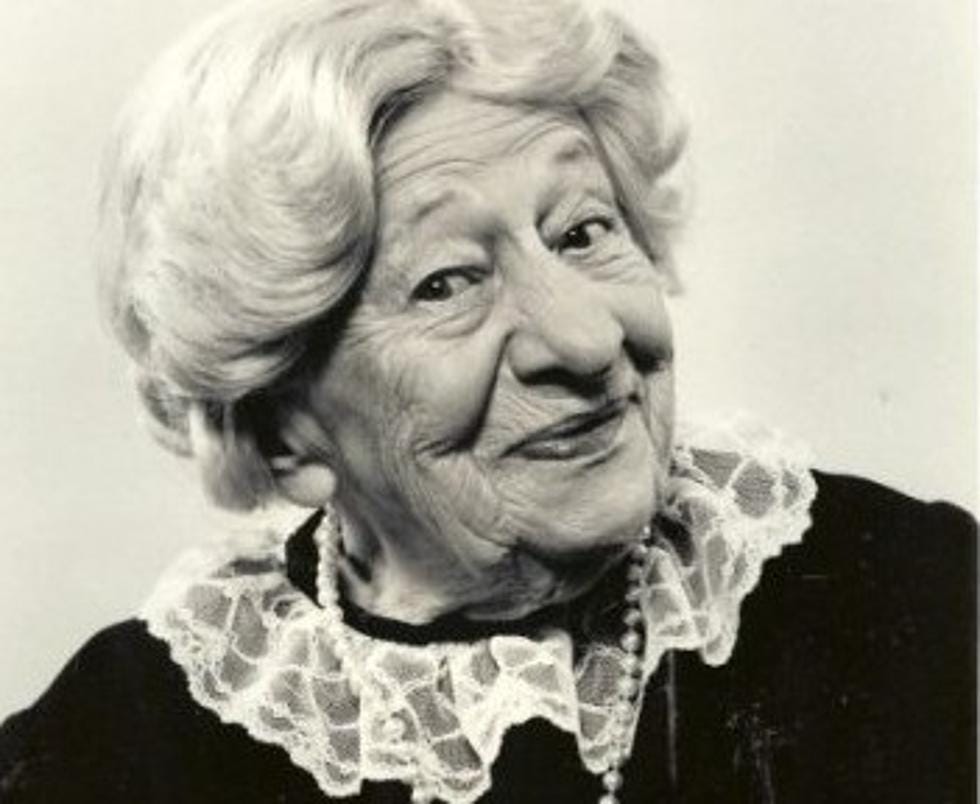
Peller was born in 1902 and had spent 35 years working for a beauty salon in Chicago. A commercial being filmed in Chicago needed to be set in a barbershop and required a manicurist. They took a chance on casting the lxxx-year-old Pellar to play the part.
The agency filming the commercial loved her no-nonsense way and unique vox. They believed they could make employ of her and signed her to an bureau contract. Peller was hard of hearing and could only recite curt lines of dialogue and so that limited what she could do on photographic camera.
She started actualization in several commercials and caught the eye of the people from Wendy'southward who cast her in their new commercial. She would be instrumental in the commercial's success.
Getting the Commercial on the Air
With the two versions of the commercial now ready, they took it to the ad committee, fabricated upwards of six executives and 10 franchisees. They rejected information technology. The commission thought the version with Peller was a little likewise abrupt considering of her louder and harsher way of speaking.
They reworked some things, and the second version of the commercial — the i you know — got the thumbs up. Many probably don't retrieve this, simply the version with the trio of men really aired alongside the version with Pellar in an former-fashioned a/b split up testing.
The version with Peller snowballed, making them dump the one with the old men and focus on the trio of older ladies. The commercial caught on similar wildfire. Even though information technology was supposed to run for merely a short while, the explosion in popularity kept information technology on the air for 10 weeks.
The Massive Impact of "Where'southward the Beef"
Advertising is tough today. There are and then many things vying for your attention, making it difficult for advertisers to find the right platform. In the '80s, with only three networks, it was much easier to go your bulletin across to a vast bulk of the viewing public.
At that place was so picayune else vying for people'south attention that anything on network television could blow upwardly by the adjacent 24-hour interval. Entire careers could be fabricated by one expert musical performance or stand-upwardly comedy set up. You lot could be an unknown comic, have a swell assail Johnny Carson, and the side by side solar day yous were a household name.
This was the case with the "Where'south the Beef" commercial when it aired in 1984. Anybody was immediately aware of information technology and embraced its uniqueness. It caught on and then fast that it became a cultural phenomenon and made Peller somewhat of a cult star.
This paid off big time for Wendy'south equally every Wendy's restaurant generated at least 10% more sales in 1984 than they did in 1983. Overall sales jumped by 31% to $945 million worldwide past 1985.
The Cultural Impact of "Where'south the Beef"
"Where's the Beefiness" made the rounds on late-dark talk shows and even turned into a song. A Nashville songwriter named Coyote McCloud recorded and performed his version of "Where'southward the Beef," and it was a pretty large hit.
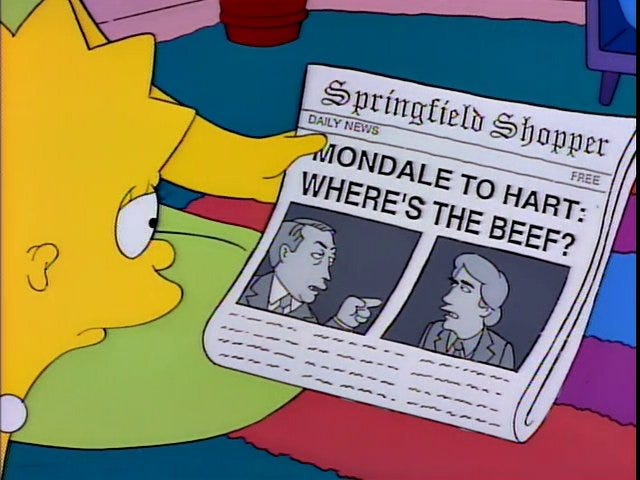
"Where's the Beef" then crept its fashion into the 1984 presidential ballot.
During the primaries of the leap of 1984, Democratic candidate and former vice-president Walter Mondale used the phrase against opponent Gary Hart. Mondale stated that the program policies put frontwards by Hart were lacking in substance. This was at the height of the popularity of the commercial and was a great style to tap into the public consciousness past using a topical phrase that was too a cut jab.
This all happened during a televised fence merely before the New York and Pennsylvania primaries. Hart was seen as being in a similar mold to John F. Kennedy — specially in appearance. His platform was based on the concept of "new ideas."
Hart had gone from a dark horse to more than of a threat and kept pushing the "new ideas" viewpoint in all his debates. Mondale seemed like he was waiting for this and after Hart repeated it during the debate, Mondale leaned over and says:
"When I heard your new ideas, I'm reminded of that ad, 'Where's the beefiness?'"
Hart would eventually have to physically bear witness his policy papers and tell Mondale, "Hither'south the beef." Mondale kept pushing about "where's the beef" with Hart'south policies and the public started seeing them the same way. It ended up casting incertitude on Hart'southward new ideas and helped Mondale win the Democratic nomination.
The Legacy of "Where'due south the Beef"
Following all of this, Wendy's would enter a big two-year sales slump. This was probably considering catchphrases come and go chop-chop, and the success is more oftentimes about the catchphrase than the brand itself.
Wendy'due south said information technology would take five years until they recovered and could create brand awareness again. But they cemented their place in history with one of the nearly popular slogans always. Ad Age named it i of the top 10 ad slogans of the 21st century and it helped propel Wendy's into the third-largest burger chain in the world.
What started out as an endeavour by Wendy'southward to call out their competitors turned into a popular-culture milestone.
Source: https://bettermarketing.pub/wheres-the-beef-the-story-of-the-most-famous-slogan-ever-550d3f0c48c
0 Response to "Where's the Beef From Wendys Commercial"
Post a Comment